
What Is the Difference Between GlyNAC and NAC?
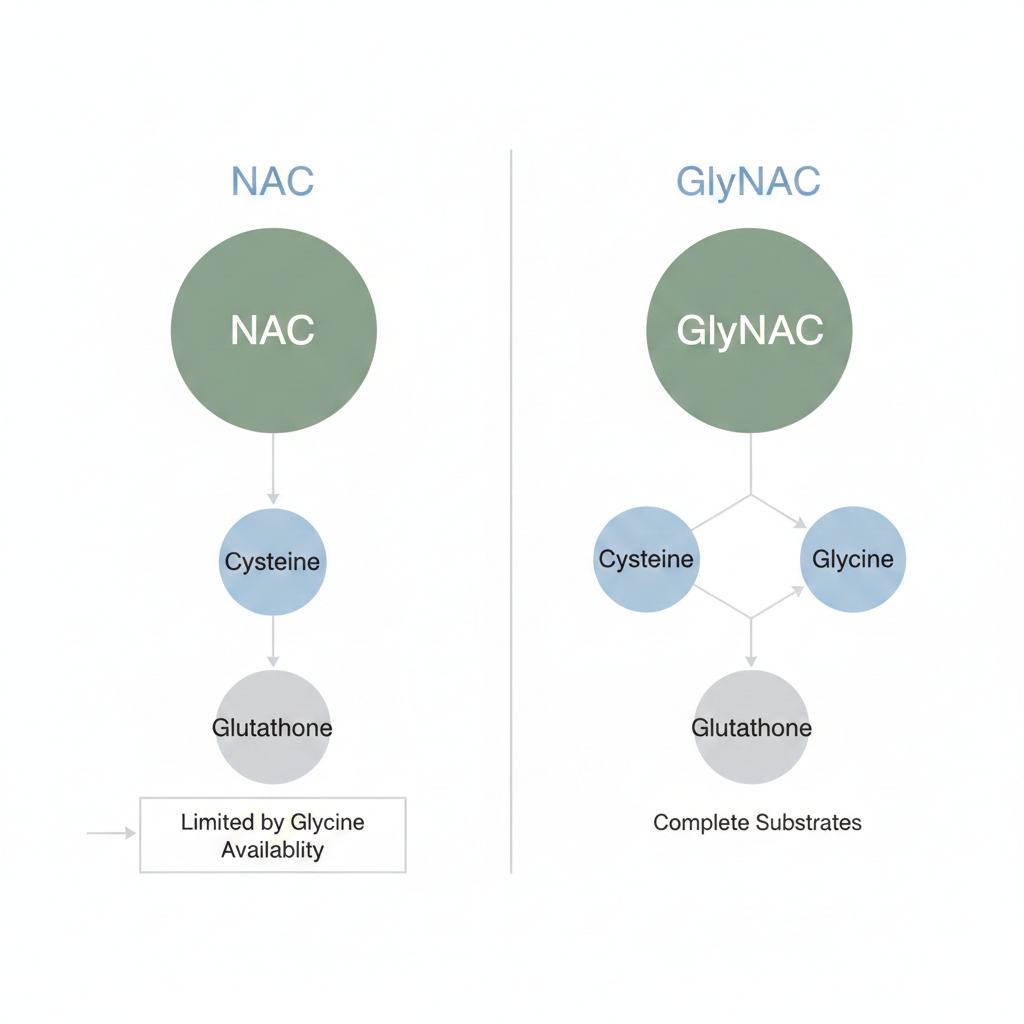
GlyNAC and NAC are related but not the same. NAC is a single compound. GlyNAC is a combination of glycine and N-acetylcysteine (NAC). This page explains the difference and why GlyNAC is studied instead of NAC alone.
What Is NAC?
N-acetylcysteine, or NAC, is a derivative of the amino acid cysteine. NAC is commonly used to support glutathione production and antioxidant balance. It has been studied for respiratory health, detoxification, and oxidative stress.
What Is GlyNAC?
GlyNAC combines NAC with glycine. Glycine is another amino acid required for glutathione synthesis. Without enough glycine, glutathione production may remain limited even when NAC is available. GlyNAC provides both precursors together.
Why GlyNAC Is Studied Instead of NAC Alone
Clinical research on GlyNAC focuses on correcting multiple precursor deficiencies at the same time. Studies found that providing NAC alone may not fully restore glutathione levels if glycine is insufficient. GlyNAC addresses this limitation.
Glutathione Production Comparison
Glutathione synthesis requires three amino acids, including cysteine and glycine. NAC supplies cysteine. GlyNAC supplies both cysteine and glycine. This difference affects the body’s ability to increase glutathione levels efficiently.
GlyNAC vs NAC Benefits
NAC may support glutathione production on its own. GlyNAC is associated with broader improvements in glutathione levels, oxidative stress markers, mitochondrial function, and metabolic health in human studies. These benefits are reported when both compounds are used together.
More details are available on the GlyNAC benefits page.
Dosage Differences
NAC supplements vary widely in dosage. GlyNAC supplements are formulated to deliver specific amounts of both glycine and NAC together. This reflects dosing protocols used in clinical research.
Dosage guidance is explained on the GlyNAC dosage page.
Safety Comparison
Both NAC and GlyNAC are generally well tolerated when used appropriately. Side effects associated with GlyNAC are similar to those reported for NAC and are usually mild. Proper dosing and quality products reduce risk.
Safety details are explained on the GlyNAC side effects page.
Which Is Better: GlyNAC or NAC?
For general antioxidant support, NAC alone may be sufficient for some people. For restoring glutathione levels as studied in aging and metabolic research, GlyNAC is the formulation used in human trials. The choice depends on goals and individual needs.
Summary – GlyNAC vs NAC
NAC provides cysteine only. GlyNAC provides both cysteine and glycine. Clinical studies on aging and metabolic health use GlyNAC rather than NAC alone. This distinction matters when choosing a supplement.
To compare products formulated according to research, see the Best GlyNAC supplement page.
Legal notice: This content is for informational purposes only and does not diagnose, treat, or cure disease. Always consult a qualified healthcare professional before using dietary supplements.